Five Key Takeaways From the Build America 250 Act
By Levi Kamolnick
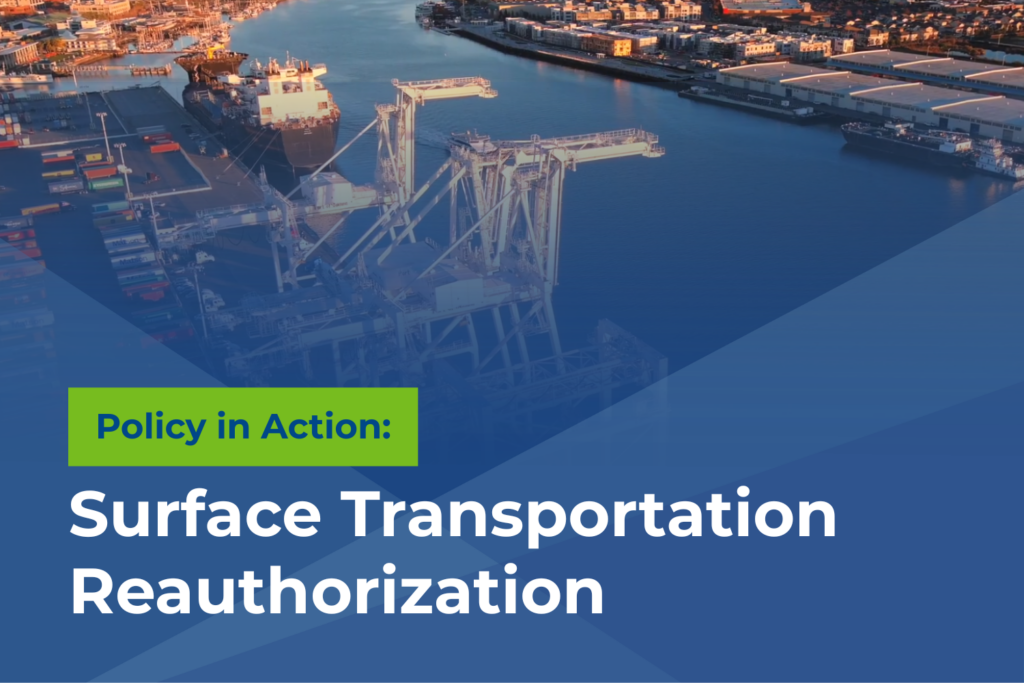
Surface Transportation Reauthorization
The House Transportation and Infrastructure Committee recently advanced the Build America 250 Act (H.R. 8870), offering the clearest signal yet of how congressional leaders are approaching the next Surface Transportation Reauthorization package. While the proposal faces an uncertain path, it’s a reminder that funding for infrastructure, zero-emission vehicles, and federal incentives is far from a given.
For the clean transportation industry, the legislation reflects the changing political landscape in Washington, D.C. and the growing debate over the federal government’s role in supporting transportation modernization and deployment.
Below are five key takeaways from the current proposal.
1. The House package faces an uncertain path forward.
While advancing the Build America 250 Act out of the House Transportation and Infrastructure Committee was a significant milestone, a long road lies ahead before final passage.
To start, it’s unclear whether Speaker of the House Mike Johnson intends to bring this to the House floor in the near future. Even with movement in the Senate, hardline fiscal hawks could still present hurdles in moving the package to a final vote.
Whatever happens in the House, the Senate has made relatively little progress toward a bipartisan agreement. While House Transportation and Infrastructure Committee Chair Sam Graves (R-MO) has offered his counterpart on the Senate Environment and Public Works Committee, Chair Shelley Moore Capito, a potential blueprint, the top Democrat in the committee, Senator Sheldon Whitehouse, quickly raised concerns with several elements of the package.
Time will tell if progress made in the House begins to thaw frozen negotiations in the Senate.
2. The proposed electric vehicle (EV) fee would exceed what many gasoline vehicle drivers currently contribute through the gas tax.
The bill includes a new fee on EVs and plug-in hybrid vehicles that remains punitive despite dropping considerably from the $250 proposal included in last year’s reconciliation package. Public data shows that the average driver of a gasoline-powered vehicle is paying about $100 per year through the federal gas tax, meaning the proposed $130 annual EV fee ($150 by 2037) would still exceed what many gasoline vehicle drivers pay today.
While some policymakers argue that heavier EVs on average justify higher road-use fees, evidence suggests the difference in road wear between gasoline and electric passenger vehicles is relatively limited. EV drivers also continue to drive fewer miles on average than many gasoline vehicle owners, making the proposed fee structure difficult to justify on a simple road-use basis.
3. Proposed formula funding for vehicle infrastructure remains far below Infrastructure Investment and Jobs Act (IIJA) levels.
The Build America 250 Act does offer a $1 billion set-aside within the existing Congestion Mitigation and Air Quality Improvement Program (CMAQ) for charging and alternative fueling infrastructure, but several important limitations remain.
First, CMAQ is a formula program that gives states significant discretion over how those funds are ultimately spent. As a result, funding would be distributed across all 50 states with varying levels of prioritization and implementation.
Second, the $1 billion would be tied to the eligibility structure of the Charging and Fueling Infrastructure Discretionary Grant Program (CFI), which includes battery electric charging, hydrogen, propane, and natural gas infrastructure.
The proposal represents a significant reduction in federal ambition compared to the IIJA. By comparison, the IIJA directed tens of billions of dollars toward vehicle deployment, charging and fueling infrastructure, port modernization, and related clean transportation investments. Programs such as National Electric Vehicle Infrastructure, CFI, the Low or No Emissions Grant Program, and the Reduction of Truck Emissions at Port Facilities would receive no additional funding under the current proposal.
One notable victory that came out of markup process was language that would fully authorize the Transit Vehicle Innovation and Deployment Centers (TVIDC) program. TVIDC offers funding to support the deployment of alternative fuel transit vehicles through technical assistance, research, and pilot programs. While the authorization language does not support new funding for TVIDC, it would ensure the program will remain in place.
4. A surface transportation extension package will likely be passed later this year.
Given the challenges associated with enacting a full 5-year reauthorization package this Congress, lawmakers will likely need to pass an extension package to prevent funding disruptions and program lapses as IIJA funding winds down. Congressional leaders will need to begin those conversations soon.
Historically, extension packages have largely mirrored the previous authorization framework, but for a shorter duration. This extension process may prove more complicated than previous cycles because IIJA relied heavily on a funding mechanism known as advanced appropriations, creating additional debate around baseline funding levels and how extension funding should ultimately be structured.
Extension packages can vary in duration, but we believe any package passed during this Congress would likely range from 6 months to a full fiscal year.
5. The Senate Environment and Public Works Committee is now in the driver’s seat
The Senate is now the primary venue for negotiations around both a potential extension package and a future long-term Surface Transportation Reauthorization bill. It is important to note, however, that when the 120th Congress begins in January, the House will need to restart much of this process as well.
At the same time, because the House package advanced on broad bipartisan terms, major elements of the framework will almost certainly remain stable in the next Congress, particularly if committee leadership remains consistent. The Senate, however, will still need to build much of its own framework, and Senate staff tend to be more narrowly focused than their House counterparts.
Ranking Member Whitehouse is widely expected to step down from his leadership position on the committee, handing the role to Senator Merkley of Oregon. Ultimately, the outcome of the upcoming Senate election cycle, could play the largest role in shaping the direction of the final package.
While the Build America 250 Act is unlikely to move forward in its current form, the proposal gives us early insight into what a final package could look like and how leaders on Capitol Hill view infrastructure spending, the EV fee, and the role of alternative fuels.
For clean transportation stakeholders, engagement during both the extension process and eventual reauthorization negotiations will remain critical to ensuring long-term certainty, continued deployment progress, and U.S. competitiveness in an increasingly global transportation market.
Get Involved
Reach out to the CALSTART policy team directly if you are interested in supporting our efforts, or consider connecting with the congressional offices where your organization is located.
To get involved with the policy team or join our Policy Action Groups (PAGs) contact Policy Program Manager, Elizabeth Szulc, for more information: eszulc@calstart.org.
Learn More
For more information on Surface Transportation Reauthorization, read the first blog post in the series.