
Canada’s EV Momentum: A Conversation with ChargePoint’s Suzanne Goldberg
We may not know exactly what the future of clean transportation holds, but if you ask Prime Minister Mark Carney, Canada will have a major stake in it. In early 2026, Carney unveiled a sweeping strategy to accelerate the country’s shift to electric vehicles, combining consumer incentives, ambitious emissions standards, industrial investments, and new infrastructure financing. At a moment when U.S. federal policy is pulling back from the prospect of EV leadership, Canada is moving assertively forward.
To understand what this means for charging infrastructure, fleets, and the broader North American EV landscape, CALSTART sat down with Suzanne Goldberg, Senior Director of Policy at ChargePoint.

Suzanne Goldberg, Senior Director of Policy at ChargePoint
What signal is Canada sending to the EV charging market with its latest policy moves?
Canada’s latest automotive strategy sends an overall positive signal to the EV market by reaffirming that the future of mobility in Canada is electric. At a time when markets are looking for policy stability, the strategy reinforces the federal government’s long-term commitment to electric mobility.
The strategy takes a multipronged approach, combining vehicle incentives, vehicle GHG regulations, infrastructure financing support, and EV industrial development. Together, these elements support consumer adoption, industry investment, employment opportunities within Canada’s growing EV economy.
One highlight was the reinstatement of the EV incentive with a clear five-year horizon, providing much needed predictability to consumers looking to purchase an EV and unlocking pent up demand from when the rebate was paused.
That said, the strategy was not without its misses. We were disappointed to see the repeal of Canada’s ZEV mandate, the EV Availability Standard. However, we are encouraged with the government’s proposal to replace it with ambitious vehicle GHG standards that target 75 percent EV sales by 2035 and 90 percent by 2040. The policy development process has not started yet and thus the emissions targets set are largely unknown, so we are hoping for strong alignment between the EV targets announced and the reduction that will be set. Ultimately, effectiveness of this policy will depend on the strength and durability of the final regulatory design.
Another notable gap was no recapitalization of Canada’s EV charging funding program, the Zero Emission Vehicle Infrastructure Program, which has played a critical role in infrastructure deployment across the country for close to a decade. The government did, however, allocate an additional billion dollars through the Canada Infrastructure Bank, which has historically supported larger scale charging deployments. While an important contribution, it does create gaps with the infrastructure project supported by the federal charging program, especially projects that fill charging gaps like rural, remote, and multifamily housing.
Overall, there were some misses, but the net outcome of the strategy is positive. Most importantly, it reaffirms the policy commitment and long-term direction that the EV charging market needs to move forward with confidence.
How do Canada’s EV and emissions policies compare to the U.S. and other global markets?
At a federal level, Canada’s new approach to EV regulation seems to align more closely with the European vehicle emissions regulatory model. This alignment with Europe represents a notable departure from Canada’s long-standing alignment with the United States on vehicle emissions standards. As the U.S. rolls back its vehicle emissions standards and attempts to eliminate state level ZEV mandates, this is a welcome development from the perspective of the Canadian electric mobility industry.
At the provincial level, Canada mirrors the U.S. state level EV support landscape, where some provinces are highly active in supporting electric mobility while others are less so. Quebec and British Columbia are the leaders, with close to a decade of e-mobility policy support and comprehensive policy packages that include incentives, ZEV mandates, and charging infrastructure investment. Other provinces are participating to varying degrees, with most provinces and territories having offered rebates for vehicle and/or charging infrastructure at some point over the last two years (e.g. Manitoba, Ontario, New Brunswick, Yukon).
Is this a meaningful inflection point for Canada’s EV ecosystem?
I would not describe this as a true inflection point, but rather as a reaffirmation. At both the federal and provincial levels (not all provinces but a growing number), Canada continues to signal that it sees the future of mobility as electric and recognizes the benefits of electric mobility for consumers and industry. Successive governments at the federal and provincial level have introduced EV policy adding durability to Canada’s EV trajectory. While there may be disagreement between governments over policy approach, the fact that these policies persist over time also suggests ongoing public support.
What are the most significant gaps or bottlenecks for Canada?
The most significant bottleneck in Canada for the last year has been policy uncertainty. Funding programs and regulatory mechanisms have not followed consistent or predictable pathways, leaving consumers and investors in a position where investments may be paused until decisions are made. A clear example is the stop-and-start nature of EV and charging incentives at the federal level. Pauses and delays distort the market, leading consumers and investors to defer decisions they would otherwise make.
While some policy uncertainty was addressed at the federal level with the auto strategy, there is still uncertainty at the provincial level around ZEV mandates in Quebec and BC.
How important is long-term policy certainty for companies planning large-scale charging investments?
It’s critically important. Charging infrastructure investments often have investment horizons of around ten years. One of the biggest uncertainties in these business cases for EV charging is utilization or charging demand, and policy signals like ZEV mandates and GHG regulation play a major role in shaping expectations around future demand.
Regulatory mechanisms such as these provide essential signals about the trajectory of vehicle adoption. While governments and policies inevitably change, frequent shifts in direction can ultimately increase costs for both industry and consumers. Clear communication from government on support for EVs matters, but strong and durable regulatory signals are fundamental.
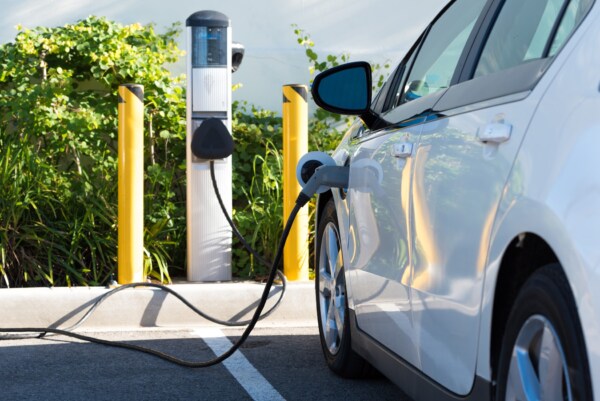
A white sedan charging at a charging station.
How do Canada’s EV policies affect medium- and heavy-duty fleets, not just passenger vehicles?
Medium- and heavy-duty vehicles are an emerging area of policy focus at both the federal and provincial levels, particularly in British Columbia and Quebec. More development is still needed—overall, policies are less mature than those for light-duty.
The Canada Infrastructure Bank can play an important role in this segment. Larger-scale fleet projects often offer more predictable utilization, which strengthens the business case and aligns well with the Bank’s lending model. The additional funding allocated to the Infrastructure Bank presents a meaningful opportunity for medium- and heavy-duty project developers.
What risks or opportunities do you see if the U.S. and Canada continue down diverging policy paths?
The Canadian and the U.S. economies have been deeply integrated for decades, particularly in the automotive sector, with vehicles, materials, and expertise constantly crossing the border. Canada has also aligned closely with U.S. federal vehicle emissions policy since the 2011 model year. Canada’s recent departure from that alignment is significant, but it also helps insulate the country from policy shifts in the U.S. that do not reflect Canadian priorities for vehicle emissions regulations. It also creates opportunities for Canada to deepen alignment with other countries, like the EU, or individual U.S. states on these policies.
How can policymakers best support charging providers beyond incentives?
While incentives are effective tools for early and mid-stage market development and filling in charging gaps, they are not a sustainable long-term growth strategy. Durable regulatory signals, including GHG standards, ZEV mandates, and clean fuel regulations, are essential for driving long-term investment.
EV-ready building policies are another important lever. Ensuring that basic electrical infrastructure is installed in residential and commercial buildings from the outset can significantly reduce costs for drivers. British Columbia and Quebec have demonstrated how effective these policies can be in supporting higher EV adoption and reducing costs for EV drivers who wish to install EV charging, especially in multi-family buildings.
There are also important opportunities for utilities and their regulators to explore how rate structures and incentive models can be designed to take advantage of the grid benefits that smart chargers can deliver.
Looking ahead five to ten years, what would success look like for Canada’s EV charging network?
Success means confidence in the trajectory of EV demand, a growing range of vehicle models available in Canada and increasing consumer adoptions of EVs.
It also means having a truly national charging network, not limited to highways or urban centres, but available wherever drivers park, including rural and remote communities, multi-unit residential buildings, workplaces, and commercial locations.
Finally, success includes strong partnerships with utilities to deploy charging infrastructure in a smart and strategic way, planning not only for increased load from EV adoption but also for opportunities to deliver broader system benefits through beneficial electrification.
Canada is charting its own course on transportation electrification—one that blends industrial strategy, consumer support, and long-term emissions policy. As the U.S. navigates its own moment of uncertainty, Canada’s momentum offers an intriguing model of sustained commitment, regulatory clarity, and cross-sector collaboration. For the EV transition to succeed across North America, charging infrastructure must keep pace with policy ambition. Ultimately, we’re hopeful that industry and government can align to make that future possible everywhere.