From One to One Billion:
The People Power of California’s Clean Truck Transformation
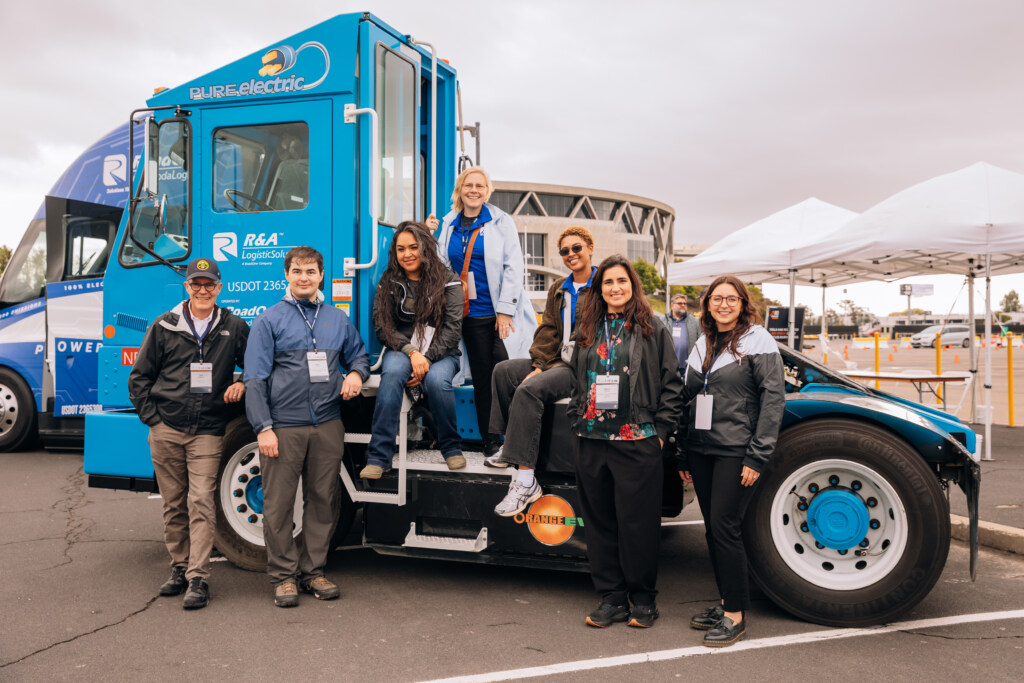
The CALSTART team alongside an HVIP-approved zero-emission truck.
Abel Aranda knows firsthand that electric vehicles can deliver real operational advantages — but for a business owner and fleet operator with 30 years of experience running delivery routes, the question was never about the technology. It was about cost. “The HVIP program made it financially possible to participate in the EV transition,” Aranda said.
For Aranda, the benefits quickly became visible—not just on paper, but in his drivers’ daily lives. “The real day-to-day impact is when you’re not breathing in exhaust inside a building,” he said. “Drivers feel the difference immediately. It’s a healthier environment to work in.”
Since 2009, the Clean Truck and Bus Voucher Incentive Project (HVIP) has helped California fleets adopt cleaner medium- and heavy-duty vehicles. By lowering the upfront cost of zero-emission vehicles with point-of-sale vouchers, HVIP makes clean vehicles more accessible for fleets of all sizes. This month, the program is celebrating a major milestone: $1 billion in voucher redemptions.
This is a hard-won and impressive feat, a monumental testament to the viability and real-world impact of clean transportation voucher programs that lower the cost of clean vehicles and help build healthier communities. But the dollar amount only tells part of the story. At the end of the day, the real impact is on the people.
It’s the small business owner who took a chance on a new kind of truck and found that the transition was easier than expected. It’s the manager who invested in charging infrastructure to serve an entire industry, rather than just the vehicles in his fleet. It’s the driver on a three-day haul, breathing cleaner air and settling into a smoother, quieter ride as the miles add up on California roads.
Funded by the California Air Resources Board and administered by clean transportation nonprofit CALSTART, HVIP has grown into one of the most impactful clean transportation incentive programs in the country, directing Cap-and-Invest dollars toward cleaner air as part of California Climate Investments. Its impact is best understood through the people it serves — each individual decision adding up to cleaner air, quieter streets, and a transportation system built for the people who keep California moving.
For many fleets, the journey starts with a single vehicle.
“HVIP vouchers have helped our customers try before they buy,” said Paul Gioupis, CEO of Zeem Solutions, a large-scale EV charging depots operator based out of the Los Angeles area. “Many of the fleets that started with just one voucher are now expanding their electric operations across California and nationwide.”
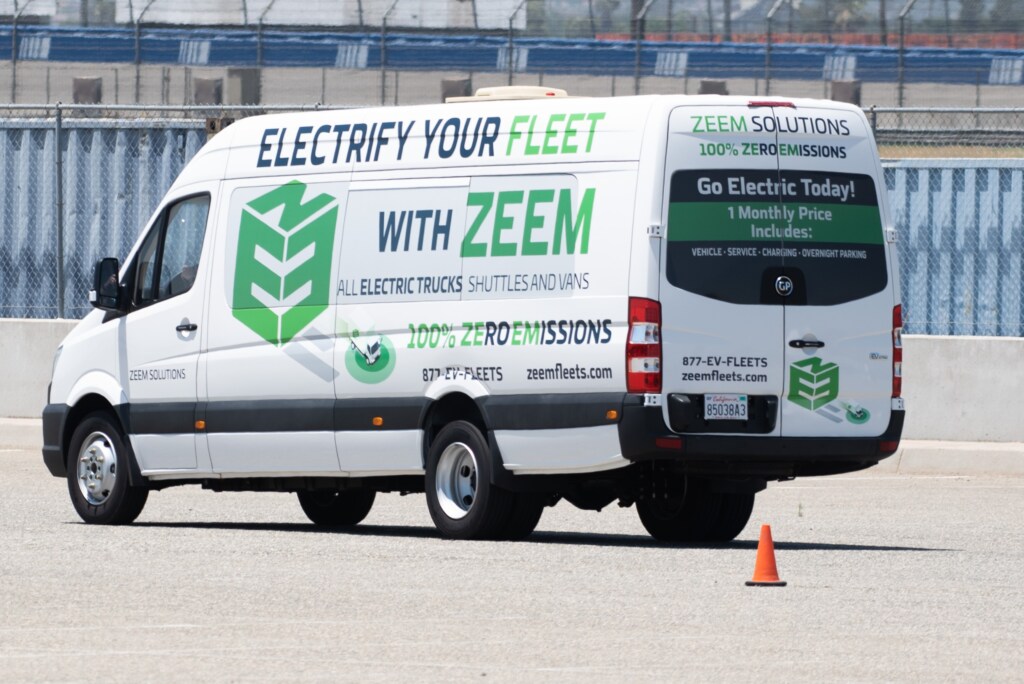
Test driving a zero-emission cargo van — one of the most popular vehicle categories redeemed through HVIP vouchers.
The shift from one voucher to full-fleet transition shows the program’s true power. For businesses navigating a rapidly changing freight and transportation landscape, a first step can spark a complete transformation, and HVIP makes that first step possible. One truck becomes two. A pilot turns into a plan. A tentative investment becomes long-term confidence.
For Abel Aranda, the benefits of making the switch were immediate and tangible.
“I’d tell anyone considering HVIP: it’s worth it,” he said. “The process was easy, the support was great, and the benefits are immediate. You save money, your drivers are happier, and you’re helping move the industry forward.”
Clean transportation is often measured in emissions reductions or dollars spent — both important metrics. But on the ground, improving driver comfort and satisfaction is invaluable. And for other fleet owners, HVIP has opened the door to something even bigger: enabling fleet growth at scale.
At OK Produce, a produce distribution business with a multi-state transportation network, CEO Brady Matoian has been using HVIP since 2020 and credits the program with making early adoption of zero-emission technology financially possible. Since then, he has scaled his zero-emission fleet to 43 zero-emission vehicles. “HVIP gave us the push to build the infrastructure and expand our electric fleet significantly,” Matoian said. “The fact that we’re buying 61 more trucks, and another 20 after that, shows how strongly we believe in this transition. When the whole industry moves together to expand charging infrastructure, it will be a huge win for the electric vehicle movement.”
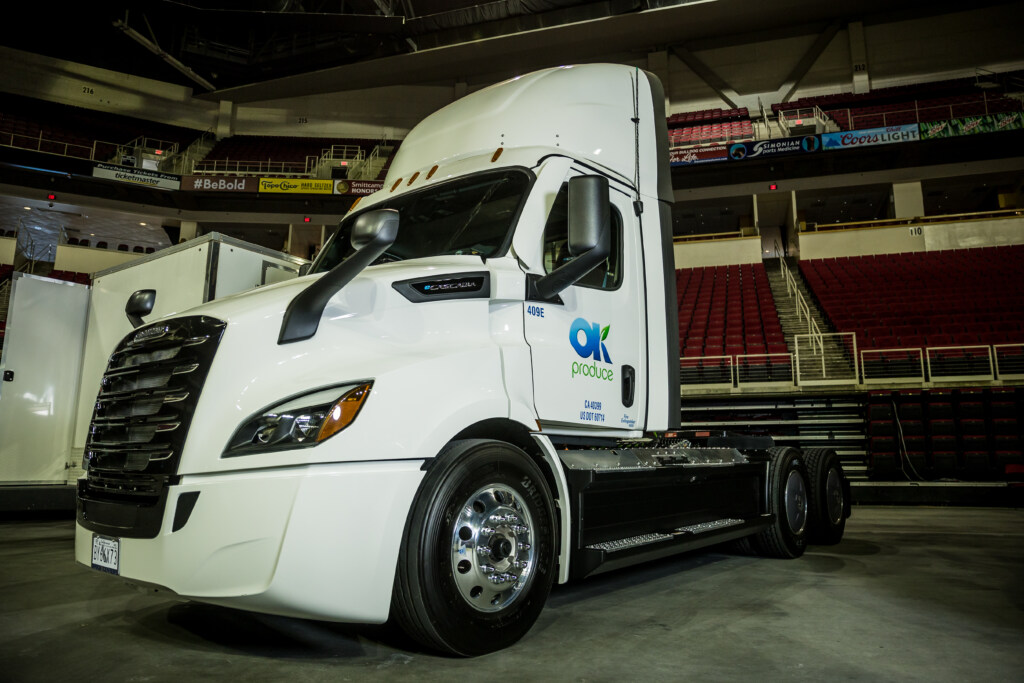
An OK Produce truck at CALSTART and CARB’s Ride & Drive, a biannual event where fleets can get behind the wheel of HVIP-approved zero-emission vehicles.
HVIP’s first billion dollars in redeemed vouchers reflects thousands of individual stories — and a larger ecosystem taking shape across California. Fleets are adopting cleaner trucks and buses, helping build the market conditions, charging networks, operational know-how, and business confidence that make adoption easier for the next fleet to go electric.
Since the program launched, California HVIP has supported more than 2,000 participating fleets, leading to more than 11,000 vehicles deployed and 181 million cleaner-air miles. This has led to a reduction of 1.5 million metric tons of carbon dioxide (CO₂) equivalent emissions and over 2,200 tons of nitrogen oxides (NOx).
Those benefits are especially important in communities that are most impacted by freight pollution. California’s busiest freight corridors and warehouse communities have experienced the health burden of diesel emissions for decades, with residents living, working, and going to school near major truck routes. HVIP’s role in accelerating zero-emission truck and bus adoption is part of a broader shift toward cleaner air and healthier neighborhoods, particularly in disadvantaged communities where the impact of diesel is higher. According to the Voucher Map, four Southern California counties — Los Angeles, San Bernardino, Orange, and San Diego — have redeemed the most vouchers since the project’s inception, with a significant share used for ZE vehicles purchases.
The program’s first billion dollars tells the story of what California has already achieved: commercialization, climate progress, and a growing base of fleets stepping up to lead. The next billion could mean even more drivers working in cleaner, quieter vehicles.
HVIP will get to the next milestone like it got to the first: one truck, one person, and one story at a time.
Are you a purchaser ready to make the switch to zero-emission vehicles? Explore funding opportunities at californiahvip.org/funding, or contact Cal Fleet Advisor for no-cost technical assistance.
For media and official program details, read the full announcement -> California HVIP Surpasses $1 Billion Redeemed in Commercial Medium- and Heavy-Duty Clean Transportation Vouchers | April 2, 2026 – CALSTART