
Top 5 Things to Consider When Planning an EV Charging Network: #1 Location
Ever considered building your own electric vehicle (EV) charging network? Now is the time to explore your options!
In this new series, we will be covering the most crucial factors you need to consider when thinking about building an EV charging network. From location to equipment and technology, funding, financial planning, business plans, incentives, commissioning, maintenance, using your market network, and regulations, we’ve got you covered.
Let’s break down what you need to know when thinking about locations for your charging network.
Read more below.
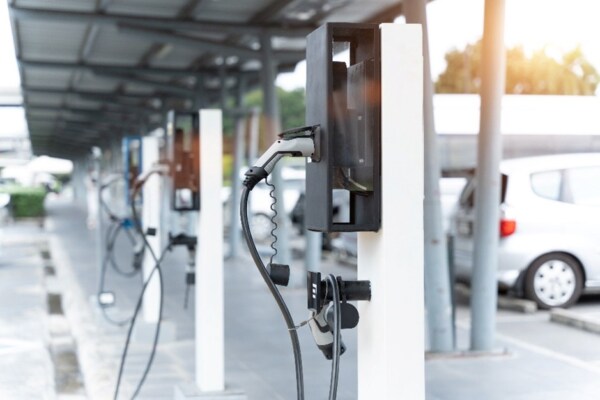
Let’s say you’ve decided to expand or start your own EV charging network. One of the first things you can do is determine where you want to place your chargers.
Choosing a location for your EV charging station can be tricky, particularly when it comes to determining which market segments or regions you want to serve. These factors will determine where you set up, how you set up, and who you will work with to build your station.
Ideally, your location will maximize the use of your charging station—you want to avoid low utilization and wasted infrastructure. By planning now, you can maximize this utilization to meet expectations for driver demand, serve market needs, and align with grid capabilities.
We’ll cover the following factors and resources:
- Target Consumer Segment
- High-Demand, Attractive Locations
- Electrical Grid Capacity
- Existing Tools and Datasets
Target Consumer Segment
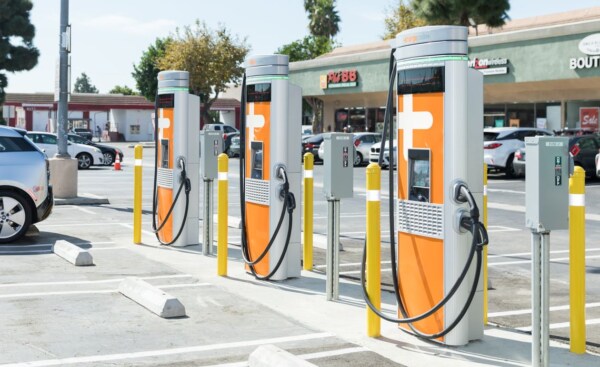
EV chargers in Garden Grove, California, powered by CALSTART member Southern California Edison and its Charge Ready program. Source: Edison International. Photo: Maria Hedrick.
The first step in determining location for your charging station is identifying your target consumer segment. Charging stations can serve a variety of consumers, including shoppers, truck drivers, residential community members, employees, long-distance travelers (including tourists), and more. Determining who you want to serve, who needs to be served, and who will maximize charging use at your station are crucial to determining location.
For example, if you know you want to serve a residential community, then you should identify areas or communities with a lack of residential charging access and an abundance of EVs needing charging points.
On the other hand, if you want to serve retail shoppers, then you should start exploring regions and areas with shopping centers that lack EV charging access. In addition to this, you should also make sure that the consumers that shop there actually have EVs that they use on a regular basis.
By identifying your target consumer segment, you can then dig deeper into their vehicle needs, areas of interest, and existing charging access. The first step is identifying that target consumer segment. Then, the research can begin.
High-Demand, Attractive Locations
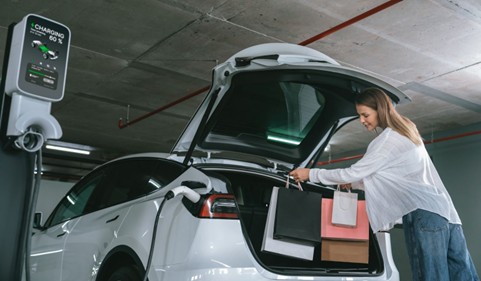
EV chargers at a shopping center. Source: ACDI.
Along with identifying your consumer segment, you should be exploring high-demand and attractive locations that can help you maximize charge utilization while staying within grid restrictions.
High-demand charging sites often fall into common categories like highway corridors and major travel routes. Destination-based locations can also bring a high demand for charging. These often include retail shopping sites, grocery stores, and entertainment centers.
Another factor to consider is dwell time – this is how long your customers’ vehicles will stay parked while charging. The types of chargers you purchase for your site will depend largely on your customers’ dwell time. More on this in our Equipment and Technology blog.
As mentioned above, residential communities can also drive demand for EV chargers if residents already possess the vehicles. It’s important to research and conduct outreach with these communities to assess if there is demand for charging access. If residents do not possess EVs, it would not be smart to bring chargers. No EV use = no EV charger use.
Another opportunity comes with office parks and corporate workplaces. If employees and stakeholders at these businesses have EVs, then they will have the need for charging access. The notion of charging your vehicle right outside the workplace while you work is attractive. Employees are sure to use it if they have the EVs to plug in.
Electrical Grid Capacity
Another key factor in choosing location for EV charging stations: electrical grid capacity. This is essential in considering where to place a charging station. Without proper electrical grid capacity, you cannot fully power your station to serve customers.
For example, if you aim to serve medium- and heavy-duty battery (MHD) battery electric vehicles (BEV), you will need to be aware of the electrical grid capacity for any location that you are considering.
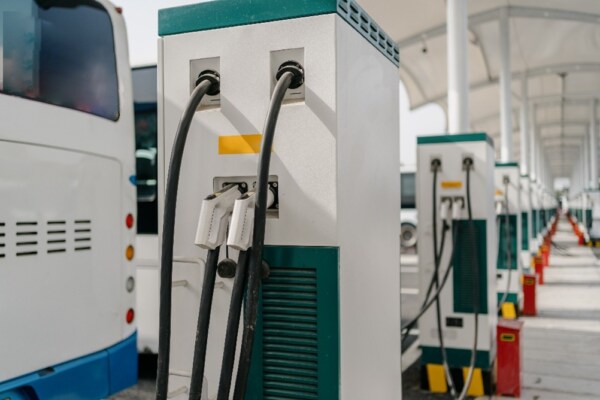
Electric vehicle chargers.
Take it from CALSTART’s experts working with the Clean Corridor Coalition (C3) program:
“Heavy-duty charging stations can require multi-megawatt power capacity, especially as ultra-fast chargers approach 1 MW or more per dispenser…planners must evaluate existing transmission and distribution infrastructure, interconnection timelines, and upgrade costs before selecting a site.”
In other words, you must consider each of these factors relating to the electrical grid when choosing a location. Be sure to also consider the type of vehicles you aim to service when looking at grid capabilities. An MHD BEV will require different electrical charging capabilities than a passenger EV.
The C3 program is a multi-state initiative focused on accelerating the transition to zero-emission freight transportation across the I-95 corridor. This program aims to create a coordinated regional charging network that enables large-scale freight electrification and reduces greenhouse gas emissions and air pollution in communities along the corridor. Keep reading to discover their top 4 insights on choosing location for EV charging stations.
Existing Tools and Datasets
In order to fully explore these important factors, you will need to learn where infrastructure already exists and what gaps remain in regional hubs before you start building your station. Thankfully, there are already several existing datasets and tools available that you can use at the touch of a button.
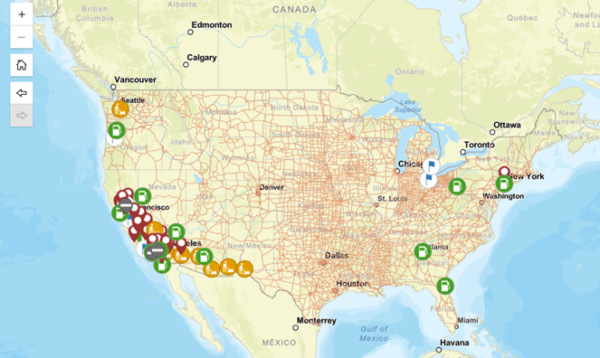
For specialists looking to serve medium- and heavy-duty EVs, consider checking out CALSTART existing infrastructure map. This tool shows you where existing charging stations are located in the United States, and you can see different stations using filters to differentiate between public, semi-public, or shared access stations; development status; fuel type; vehicle access type; connector type; and more.
Using these filters, you can see which states, cities, and corridors are already serving medium- and heavy-duty vehicles. If you are interested in building charging stations for those specific vehicles, we encourage you to use this resource effectively to ensure that you are maximizing charging use while still meeting customer needs for a specific region.
If you are interested in zero-emission truck (ZET) charging, we encourage you to view our ZET Ahead Dashboard. This resource features studies, links, and interactive tools that you can use to learn the latest in the ZET market, which can help you determine where you want to place your charging station.
For individuals actively researching locations, you may also rely on vendors who have developed their own internal analytical tools to evaluate sites. Or you may reach out to firms providing software to help determine factors relating to charging operations, energy management, capital planning, and more. You may also consider reaching out to economic, engineering, or related consulting firms depending on what information you need.
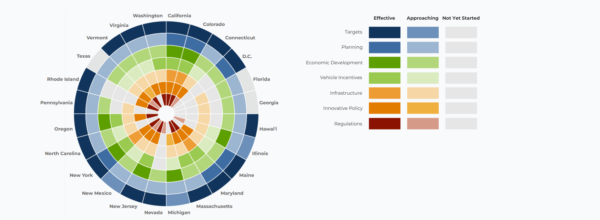
CALSTART’s ZET Ahead Dashboard.
There are also several existing public datasets and resources which can be extremely helpful as you determine where your charging station should be, including the:
- Joint Office of Energy and Transportation’s EV Charging Stations Map
- U.S. Department of Energy’s EV Charging Ports by State Map
CALSTART Experts Bonus Feature: What Do You Wish More People Understood About Choosing Locations?
To close, our experts working with the C3 program provided snapshot insights into what they wish people understood about choosing locations for EV charging. Read more below:
- “Each vehicle application has distinct charging needs that should guide both near-term and long-term sitting decisions”
- “The best truck charging locations are determined by freight operations and supply chain integration—not purely by convenience, amenities, or near-term efficiency considerations.”
- “Site selection is often a balance, or ‘tug of war’, between grid capacity and operational demand.”
- “Location planning tools are widely available and increasingly accessible.”
Remember to consider the factors discussed in this blog, along with your own goals, while looking through the resources provided. These factors, when put to work together, can help you determine the optimal charging location that will bring you and your station success.
That’s not all. Keep an eye out for our next blog covering another key factor to consider in building your EV charging network: equipment and technology.